
The core idea: RECAM doesn’t just detect “movement” — it tries to detect meaning. Motion + sound + silhouettes combine into an event decision, locally on the camera phone, in milliseconds. This is why AI-powered CCTV matters in 2026.
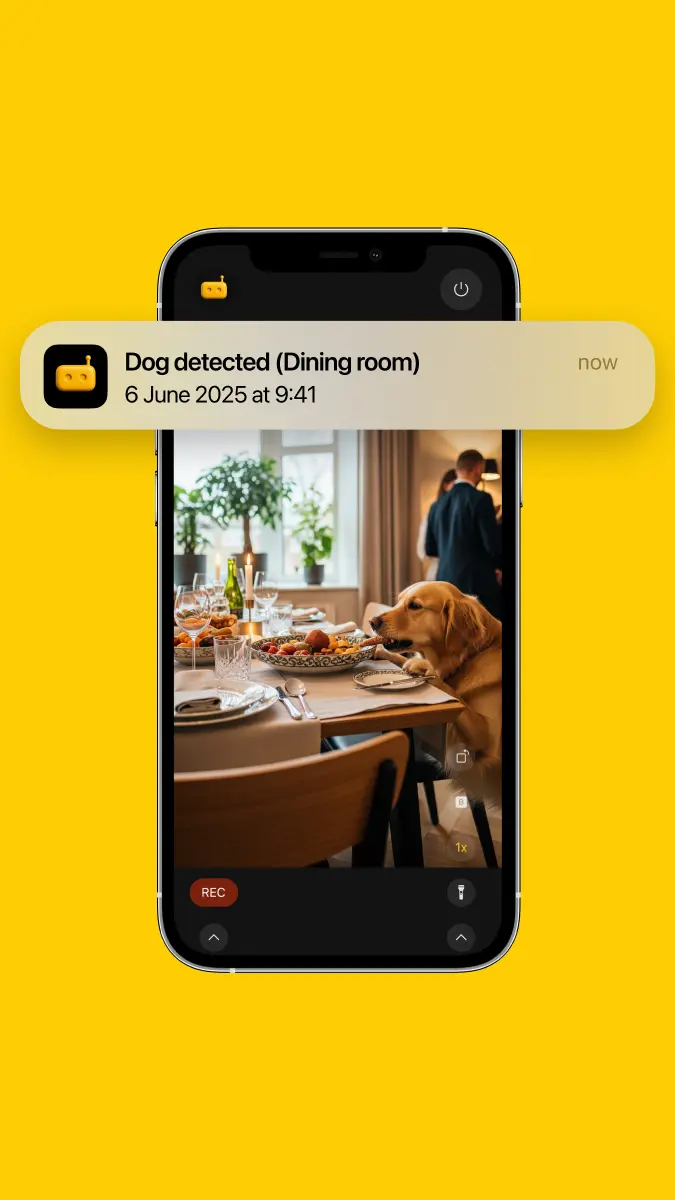
The Notification Decision Pipeline
Think of RECAM as an event engine: it watches, listens, and then classifies what’s happening — all locally on your device. Instead of sending you an alert for every change, it runs a fast decision loop that prioritizes real-world threats and meaningful moments.
The result is what users actually want from smart home alerts: fewer notifications, higher trust. It’s the difference between “something moved” and “someone is here.”
Motion Detection: Beyond Pixel Changes
Most cameras use simple motion detection: if enough pixels change, you get an alert. That’s why you get spammed when a curtain waves, headlights sweep across the wall, or tree branches move.
RECAM uses a smarter approach: it evaluates motion patterns and context so you can target what matters. You can monitor a doorway, a cash desk, a hallway, or a garage entrance without being flooded by background motion.
What “meaningful motion” looks like
- Directional movement (e.g., someone entering a monitored zone)
- Human-scale movement vs small random movement
- Persistent motion that lasts longer than a flicker or shadow
- Zone-based motion (door area vs window reflections)
If you’re searching for an AI motion detection camera that doesn’t panic every time the lighting changes, this is the key difference: RECAM tries to detect events, not just pixels.
Sound Detection: From Noise to Signal
Sometimes the real clue isn’t visible — it’s audible. A door slam, a knock, glass breaking, a baby crying, a tool running in the garage. RECAM’s noise alert camera logic listens for meaningful audio events and ignores the rest.
The critical part: sound classification happens on-device, in milliseconds. No cloud upload. No external analysis. Everyday noise like traffic, rain, or distant chatter can be filtered out to reduce false alerts.
Why sound alerts are crucial at night
- When the room is dark, the camera may see less — sound still works.
- A quiet home with a sudden anomaly is a strong signal (knock, bang, alarm).
- Sound + motion together increases confidence and reduces spam alerts.
Silhouette Detection: Cat vs Human vs “Unknown Shape”
One of the most important upgrades in modern security is detecting what moved — not just that something moved. RECAM uses on-device visual cues to identify a human silhouette, differentiate it from small animals, and interpret the event accordingly.
Why this matters in real life
- Cat crosses the room: useful for pet monitoring, but often not a security emergency.
- Human shape near a door: likely meaningful, deserves a fast alert.
- Shadows / reflections: common false triggers for basic motion cameras.
The goal isn’t just detection — it’s relevance. RECAM is designed to notify you when the situation looks “wrong,” not when your environment simply changes.
Examples: Intrusion vs Normal Movement
Here are simplified examples that illustrate how RECAM’s signals combine into a “notify / don’t notify” decision. (In practice you can customize sensitivity, zones, and sound categories.)
Scenario: Curtains move + daylight shift
- Motion: low-confidence (soft movement)
- Silhouette: none
- Sound: none
Outcome: no alert (avoids spam)
Scenario: Human shape enters doorway at night
- Motion: directional, persistent
- Silhouette: human
- Sound: door / knock (optional)
Outcome: instant alert + clip
Scenario: Cat jumps on couch
- Motion: small-scale, short
- Silhouette: small animal
- Sound: low relevance
Outcome: optional alert depending on settings
Scenario: Glass break + movement in room
- Sound: strong anomaly
- Motion: immediate follow-up
- Silhouette: often human / unknown
Outcome: high-priority alert
How to Tune Alerts to Your Space
The best smart notification system is the one that matches your environment. RECAM lets you adapt alerts to your real world: a quiet hallway has different needs than a busy living room; a garage has different signals than a nursery.
- Choose zones: focus on doors, entry points, restricted areas.
- Prefer meaningful sounds: knocks, glass breaks, alarms, baby crying.
- Reduce noise: ignore constant background sources where possible.
- Layer signals: motion + sound = better confidence, fewer false alerts.
The goal is simple: notifications you trust. If you stop trusting alerts, you stop checking them. RECAM is built to reverse that.
Get Notified Only When It Really Matters
RECAM is designed for people who want real security — not constant interruptions. With on-device AI, encrypted peer-to-peer streaming, and customizable detection, you stay informed without the notification fatigue.
Try RECAM and get notified only when it really matters — not every time the curtain moves.
FAQ
What makes RECAM’s smart home alerts different?
RECAM uses on-device AI to understand what’s happening (motion, sound, silhouettes) instead of alerting on any pixel change. This reduces false notifications and prioritizes meaningful events.
Does RECAM send audio or video to the cloud?
No. RECAM runs detection locally on the camera phone and streams video end-to-end encrypted in real time — direct between your devices when your network allows, with an encrypted blind relay fallback that can never read your stream.
How does RECAM tell a cat from a person?
RECAM combines on-device vision cues (shape, movement patterns, silhouette) with context, so small animal movement can be handled differently from human presence near sensitive zones.